Category: Change Flags

Churn Flags podcast episode writeups — the nine Change Flags that trigger customer re-evaluation, and the retention experiments that catch them.

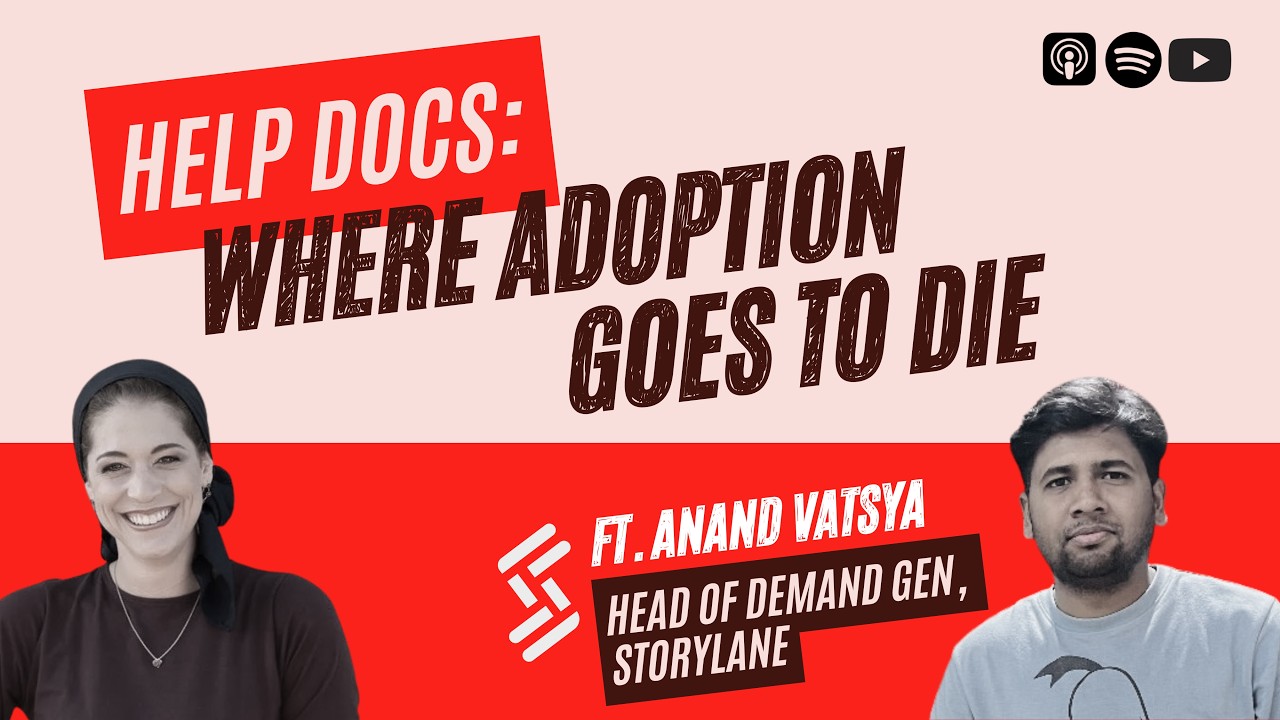
  • The obvious product-adoption win — and most SaaS brands aren’t doing it

    The obvious product-adoption win — and most SaaS brands aren’t doing it

    When good comms aren’t good enough

    I may not be Deloitte or Michelin or UNESCO or any of the other cool accounts that use Paperform, but I still think I’m a dream enough customer. I’ve recommended the form builder to basically everyone I work with, I’ve hosted products there for years, and back when they had a referral program, I had a little pitch I’d copy-paste from my Stickies.

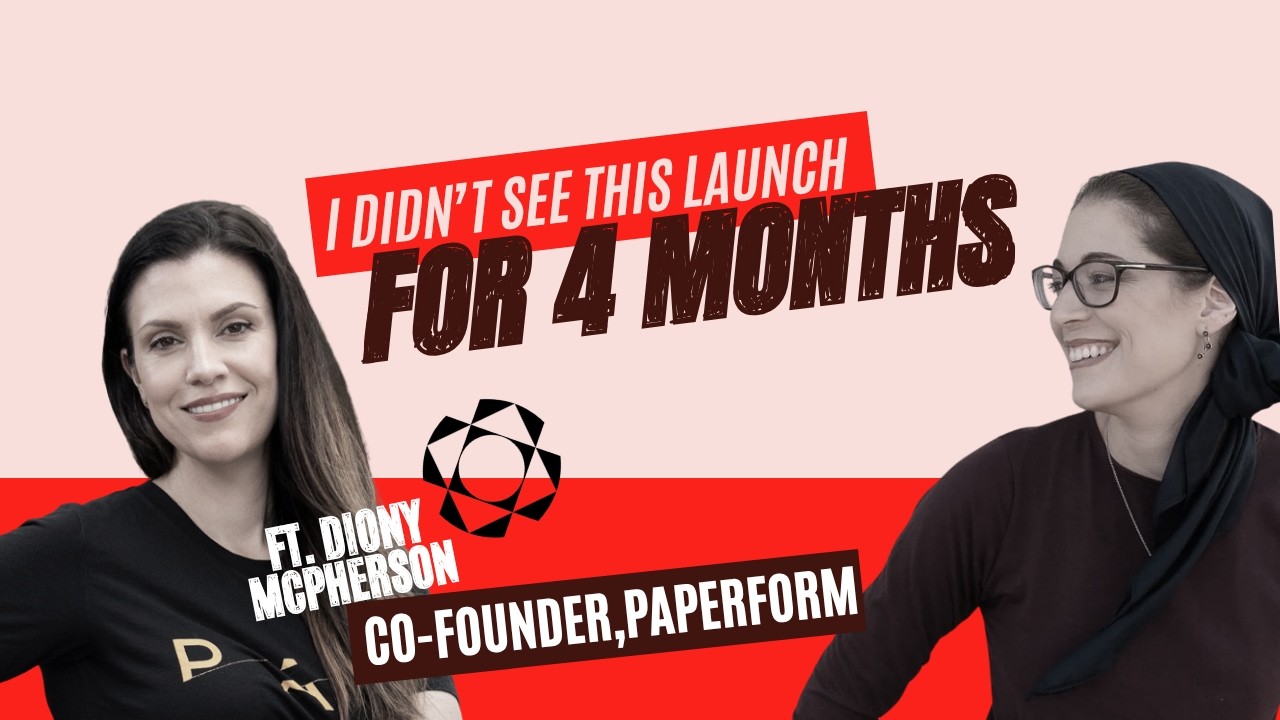
    Yet I missed one of their biggest launches in years — an entire new product — for four whole months.


    Not because they botched it. Diony McPherson, Paperform’s co-founder, walked me through the Stepper rollout on this episode, and it was the whole playbook: Product Hunt, socials, SEO groundwork, referral sources, newsletters, in-app banners… the works.

    This is a company whose Aussie founders set alarms every two or three hours through the night in the early years so they could answer live chat for US customers. Their comms are g-o-o-d.

    I missed all of it anyway.

    Announcements keep your schedule. Habits keep theirs.

    Every announcement is calendar-based — it lands when you ship. For it to work, the launch window has to overlap with the customer’s attention window, and attention windows close constantly for reasons that have nothing to do with you: a vacation, their own launch, parental leave, an assistant (increasingly an AI agent) deciding which emails deserve a human.

    Any single broadcast only catches whoever happens to be around that week. Run that math across a whole customer base and a “successful” feature launch misses most of the people it was built for — not because they weren’t interested, but because they weren’t standing at the window when the announcement flew past.

    My forms were running fine, so I had no reason to log in. An assistant was triaging my inbox, so the launch emails never reached my eyes.

    So how did I finally find Stepper? On an ordinary day, I went into my integrations tab to connect a form to my email platform — and there it was, sitting in the exact place it belonged, at the exact moment I had the need it could solve.

    That’s the more effective move: behavioral triggers. A placement inside the product — in a spot the customer visits right when they’re about to do exactly what your feature solves — doesn’t care what week it is. And it’s patient. An announcement decays the moment it’s sent; a triggered placement compounds, catching someone new every day, indefinitely. Four months late, in my case — and Paperform didn’t have to lift a finger to earn my adoption.

    I’ve been shouting from the rooftops for years about behavioral flows (ever since it sunk in that the 64% increase in paid upgrades I earned Doodle was less about my snarky copywriting and more about our strategic behavioral mapping — womp womp), and with the plethora of in-app capabilities these days, we’ve only increased the surface area.

    The launch, replayed

    “If we launch and it flops, which happens to a lot of people, you can always just relaunch.” Diony’s launch philosophy is realistic and persistent — and because we do still need to launch, it’s the best way to give your calendar-based channels some behavioral-trigger traction. Enough sends, and eventually one lands inside an open window.

    But placement is the cheaper, better version of the same move: one relaunch that never stops relaunching. So before you write the next launch announcement, list your touchpoints. The integrations tab. The template gallery. The export screen. The billing page. You can even work backward from the error message a customer would hit right before your new feature would have saved them.

    Every product or feature has a handful of places customers walk into holding a specific need. We earn more attention when we meet them there.

    The other two-thirds

    The Stepper story is just a third of my conversation with Diony (and it came as a total surprise).

    We open every episode with a customer review — the Paperform one asked them to become Qualtrics — and my opening diagnosis did not survive its first two minutes. (You should hear Diony take it down live rather than read it here. She’s so polished.)

    Plus the rename experiment I pitched that earned the fastest, most well-reasoned “no” I’ve ever gotten on a branding move (ten years of SEO equity will do that). Plus what happened when Paperform’s “Swiss Army knife” analogy meant nothing to customers. And finally, the experiment Diony did pick — not to mention the one that had already shipped the morning we recorded.

    Watch or listen to the whole thing below.

    Listen & subscribe: Apple Podcasts · Spotify · YouTube · everywhere else

    Diagnose your own Change Flags — free

    Nine Change Flags quietly push customers to re-evaluate you. Find the ones your product is facing in about five minutes.

    Get the free rubric →


    Read the full episode transcript

    Nikki Elbaz (00:00) Do you check your email every day? You probably think you do. And mostly you do. Except the week that you’re on vacation. Or underwater on your own launch, or if you’ve been there, the months that you take off for parental leave. There are real windows where you’re just not there. So what happens when a company that you love? Ships the exact thing that you’ve been waiting for right into one of those windows. You don’t ignore it. You miss it. And when you finally catch it, your reaction isn’t to shrug. It’s, wait, how long has this been here? I’ve wanted this since the day it shipped. That’s not a customer who needs to be sold. That’s a customer whose window didn’t line up with yours. You’ve probably heard that a launch should never be a moment. It’s something you have to keep doing and keep placing until your user finally trips over it. Today’s episode is the cleanest example I have got for this. Because it happened to me.

    Nikki Elbaz (00:47) First of all, I noticed it in app. I was not going into in app for a while. I had my forms running and I just didn’t go into it. And then I started noticing some emails from you guys, which also I was having an assistant run through my emails, so I wasn’t really catching my emails.

    Nikki Elbaz (01:00) And that me a power user. Missing an entire product for four months is exactly the kind of thing that this show is built to catch. Because here’s what we do on this show. Every episode, I hand my guests a piece of real customer feedback. A three star review, a Reddit rant, a puzzling survey response. Together, we build an experiment based on what the feedback is actually telling us. Did you catch that? Actually telling us. not just the surface ask, the shift underneath it. Because the SaaS playbook has trained us to read feedback one way, as a feature request. A line for the product backlog, Something to build or politely decline. But it misses what feedback is often really doing: Waving a flag that something has changed for your user. And they’ve started reevaluating how you fit into their life. I call these moments change flags, and there are nine of them that matter. Some of them happen when you make changes in your product. Some happen when things shift in your user’s life or in the market at large. We’ll tackle a different flag every episode. And here’s the really exciting part. If you catch one of these change flags too late, the user just slips away. No complaint. No warning. Gone. No, obviously that’s not the cool part. We hate when that happens. Here’s the cool part. If you catch a flag in real time. That same moment flips into expansion. The user goes deeper, they upgrade, they add seeds or usage that they didn’t even know they needed. Same flag, two outcomes. And this show exists to help you see churn As just another change that you can catch. to turn your riskiest users into your champions. I’m Nikki Elbaz, bringing 15 years of SaaS marketing to these conversations. Welcome to Churn Flags. we are looking at a review for Paperform with co-founder Diony McPherson. Full disclosure, Paperform is a product that I have been a little obsessed with for quite a few years. I am not a neutral party here. I’ve recommended it to basically everyone I work with. because I love both the actual product and the team behind it. The people behind Paperform are so breathtakingly intentional. They really truly and I I really mean really truly care. And I know that sounds like fluff that everyone says, but listen to Diony for just one second and you will see what I mean. Diony is offering 50% off Paperform Pro and Stepper Pro until the end of June. Check out the details in the show notes. So I came in pretty sure I knew which flag we were looking at. Diony took about two minutes to throw my entire thesis out the window. Gently, of course, but then she mentioned the thing that turned out to be the real story. Let’s read the review given to us by Shariq, who’s an executive director at a small business.

    Nikki Elbaz (03:20) Yes, Shariq. How can we help you, Shariq? What do you dislike about Paperform?

    Diony (03:23) Yeah.

    Nikki Elbaz (03:24) I wish I could use it as a full-fledged survey solution with built-in analytics such as Qualtrics. However, if that were the case, then it would lose its identity and it would be way outside of our budget. And then what’s cool is that Dean responded and he said, okay, actually we recently released our AI Insights tool. So check it out. Obviously, it’s not the same thing. It’s not Qualtrics, but it is something that can give him that outcome.

    Nikki Elbaz (03:48) So like I said, when I first read Shariq’s review, I was pretty sure I knew what I was looking at. I thought this was a mastery flag. mastery flags pop up. When a user has hit a level of sophistication with your product. when they’re ready for more than for what they originally came in for. When they’ve outgrown their initial use case. This is a classic expansion flag. Show them the next step. And they’ll increase usage immediately. And that’s exactly what I thought Shariq was telling us. He loves Paperform, He’s clearly advanced. And now he wants Qualtrics level analytics. Classic mastery, right? He’s ready to start using his data. Paperform should show him AI analytics. Done. So I brought that to Diony, and she brought in a whole nother angle.

    Diony (04:24) I don’t think it’s mastery because I think if the functionality I s this is my assumption, my intuition, is if I sat down and talked to Shariq that he actually knows Paperform’s product really well. and he might have even already found the AI insights. And he might want even more than that, which is what you know Qualtrics are doing, which is a really complicated analysis of data. And that’s why he recognizes that that’s not what Paperform does. But he’s like, man, I wish. Imagine if it did. And so we as founders have to reflect on that and say, is that is what he’s saying something that customers will just expect from form builders and we should consider it? Do we see it having integrity with the strategic direction that we have at the moment?

    Nikki Elbaz (04:52) Mm-hmm.

    Diony (05:07) Or is that going to push us into a niche in a category that we actually don’t want to live in, at least right now?

    Nikki Elbaz (05:15) So wait, it’s not a mastery flag? Did I just open my brand new podcast with a mistake? Deep breath, Nikki, you got this. Stay in curiosity here. jokes aside, this is actually something I see in my engagements all the time. Companies bring me in because I bring in a level of expertise on Life cycle marketing. But the team inside has an equally important level of expertise in their own product and user base. Often they have the insights and angles that can only come from deep inside experience. I can help them tease them out. I can bring in fresh angles. Sometimes I need to let go of my assumptions and listen. And when I do that, that’s when the real magic happens. Diony has seen this flag play out over and over again. You’ll hear more on this soon. but this is an insight that she brings From experience. I can’t just ignore it, Even though I’m a little panicky that we just killed our episode. Spoiler, we didn’t kill the episode. I just had to stop and listen what Diony said next. But first, let’s rewind to her initial reaction to the review.

    Diony (06:06) I’m not saying this just because I’m biased, but I I find the first part of that review really interesting too, in that the dislike is actually directly connected to what they love. They love that Paperform easy and intuitive, that it helps them to collect data but also integrate via Zapier and get their data where it needs to go. And then as an extension of that, the thing that is missing for them is that they get to do something with that data that has meaning. How do I make meaning of it? And that’s what, you know, something like Qualtrics will take all of the data that you have and analyze it and give you not just metrics on it, but insights in. to it. and then at the same time they recognize as they’re writing this down. I love, I love this actually. I do get defensive because I love Paperform. And I’ll be like, no no, we could do that. Or, no, you you just missed this thing. Or no, it’s not supposed to be that. But this one I don’t feel that way because I totally get it. they’re going through the process themselves of saying it would be great if you could be a fully fledged survey solution where you have the data and then do something very meaningful with it. With the analytics such as Qualtrics, but if that’s the case, then Paperform could lose its identity, or he goes on this philosophical identity crisis for us, which is great. And it would be way outside our budget. So the assumption that he is there is that it’s gonna be really expensive. So there’s some kind of understanding, Shariq clearly understands what it means to build a product, to manage a product, and also to run a product as a business and what that means about passing costs on to your customers. So I love this response and if from day one what we’ve grappled with, and I think probably everyone in product grapples with Is drawing the line and being clear about what it is that you’re offering and sticking to that vision and that brand identity as well, but product vision, and making that a very clear offering to your customers and not getting too sidetracked by the million and one things that you could become. So when I first see this, my initial response is, how wonderful that he recognizes that it’s not matter of saying, yes, we could add that or we couldn’t. It’s not about feasibility necessarily. It’s about asking whether or not it makes sense for the product and the solution that you’re offering. And then my brain immediately goes to however in 2026, with where Where dev is heading with AI and with who we are is very robust as a product. We’re not just surveys, we’re not just one question at a time. We’re payments, we edge into e-commerce, we edge into a lot of different spaces. And so offering really good analytics, which we’ve already done work on actually in the last year, but if we kept doing more, it it maybe wouldn’t be too far outside of The identity that we have built for ourselves and where people are expecting us to go with what’s available with

    Nikki Elbaz (08:46) So now I’m listening differently. And here’s what jumps out. Diony keeps saying that Paperform is way more than forms. Payments, e-commerce, scheduling, all these directions they’ve already grown into. They are constantly deciding which do more’s are worth it. And which ones would blow up the identity that they have carefully built? Deep analytics, the thing that Shariq is asking for. They are mostly choosing to pass on, although Diony is exploring the possibility. So now I’m curious, of all the directions that they can expand into, which do they actually say yes to? What do they build out and expand on? And that question is the thing that cracked open this whole episode. Because Diony told me something that took me totally by surprise.

    Diony (09:23) For Stepper, which is our new product, which is workflows, but works very closely with Paperform because it adds all of the integrations that you need to be able to do stuff with your data, with Paperform, with any number of of apps, but you know, create these full end-to-end workflows, which is, you know, you create you create one product like a a form builder like Paperform and then all sudden you realize that there’s a way bigger flow there from your customers that people need. And so it’s was natural for us to then move into work a workflow product. But we launch we launched Stepper at a really awkward time, which was at the end of end of last year. and Christmas and then events of earlier this year have stunted us a little bit in that energy. And so we’re we’re getting back to it.

    Nikki Elbaz (10:03) just saw it last week, two weeks ago, I thought that you just launched it.

    Diony (10:08) In some points what kind of feels like that we have as well. It’s it feels like yesterday. Yeah, it’s it really is very, very fresh. and we’ve got a a great response so far and we’re seeing a user base grow very healthily. which is really, really exciting. And what I haven’t gotten a great gauge on yet that’s next on my agenda is talking to Stepper and Paperform users and making sure that that there’s a there’s a really good exposure of Stepper to Paperform customers, which hasn’t, you know, you’ve just found out about Stepper now. hasn’t been as obvious.

    Nikki Elbaz (10:41) yeah, this amazing product launch that I missed until now, which is not so crazy. First of all, I noticed it in app. I was not going into in app for a while. even, I had my forms running and I just didn’t go into it. And then I started noticing some emails from you guys, which also I was having an assistant run through my emails, so I wasn’t really catching some my emails. So it doesn’t necessarily mean that you didn’t do your part.

    Nikki Elbaz (11:03) Did you catch that? That’s a real product flag. That Paperform is actively working to take down. Product flags are exactly this. You launch or acquire a new product, and then you are so busy launching it, usually to the general public, that you don’t take it all the way to the end. And ensure that existing customers are actually seeing it and adopting it. Let’s see how Paperform tackled their launch.

    Nikki Elbaz (11:22) was the assets when you launched Stepper?

    Diony (11:25) so we here we like to obviously go to a a very common protocol for a lot of people is product hunt. So going on product hunt for that moment. email our email newsletter for Paperform in particular was very important because we built Stepper largely because it I mean this this comes back to what Shariq is saying, you know, expanding your product, where are the limits of your product and how clear are you about the roadmap that you have that keeps the integrity of the product. We can see ways to expand on Paperform that really should be distinct products that work really nicely together, that, you know, we’re moving from being SaaS to Paz platform as a service. and workflows were a really obvious step for us. And so being able to expose Stepper to our Paperform audience is a no-brainer because it’s why we built Stepper is because we heard our Paperform customers asking for it, paper sign our other product as well. we we had people hacking Paperform to be able to create contracts, contract workflows, and we were like, no, no, no, we should be there are so many people doing this, we should produce an an e-signature solution that works really nicely with Paperform and and so we have that now. And so when we launched Stepper, we hit product hunt, we went on socials, and then you know, Stepper being a separate product, we had to make sure that it was able to set up on its own as well to new audiences. So we prepared, you know, a lot of SEO, a lot of we rely quite heavily for growth on champions, word of mouth, people genuinely loving the product and telling people about it. And the other half of what we do is content, SEO. And obviously now AI search, GEO, whatever people are calling it at the moment, is really, really important, but very tied to SEO still. and so we did a lot of prep for content and making sure that we could be found in search results for the general public. And then we had in-product banners for Paperform that said, Hey, you were building workflow on on Paperform, check out Stepper. And then we pointed to Stepper because it lives in the same dashboard

    Nikki Elbaz (13:24) the way I discovered it when I went into the integrations tab to connect the form to my email that was the most genius way because it’s literally where it lives. So yes, obviously there are more use cases that I am now using it for, other workflows. But when you’re talking to your existing customers, the way that you wanted it to be that your Paperform customers are using it, that’s the most. natural way that it should show up.

    Nikki Elbaz (13:48) Okay, so start with what just happened here. They built Stepper specifically for their existing Paperform customers. In Diony’s words, putting in front of us was a no brainer. So in addition to the public facing strategies, like product hunt or social SEO, they put it in front of customers, email comms, in app, pop ups right in the integrations tab, Right where a user would naturally reach for another tool. So why didn’t I see it? Simple. I was busy, like ninety-nine point nine percent Of your customers. Which is why it needs to go everywhere and not just go everywhere once, but again and again. Why did I eventually find it four months later? Because they kept sending me signals.

    Diony (14:23) Yeah, so our view of a launch as well, quite frankly, is if If we launch and it flops, which happens to a lot of people, you can always just relaunch. I wanna say that to anyone listening who’s thinking about launching a product or has already and is like, we launched and it just didn’t get that much attention. Just launch again. just relaunch.

    Nikki Elbaz (14:38) not even launch again. It’s keep launching, keep launching until everyone you hit that at least 25 % adoption rate.

    Diony (14:46) Yeah, make make a make a moment.

    Nikki Elbaz (14:48) Okay, so we’re dealing with a product flag? Actually, listening to Diony. I think we’re tackling something bigger. I think we need to move up a level to the third platform flag, perception.

    Nikki Elbaz (14:58) So I’m actually thinking that this is a perception flag where people come to you and think that you are a form builder because it’s called Paperform and it starts primarily as a form builder, but you’re so much more. And I’ve experienced this myself as well. Actually, I signed up years ago for the form builder and then you, I believe it was when you launched payments and I was like, wow, I can sell my products on here. Why do I even need ThriveCart anymore? I ended up keeping ThriveCart for other things, but it hosted a bunch of my products for a long time where it really had that capability. And when you had the referral program. That was always my little pitch was, this is not a form builder. This is so much more. You can do so much more with it. It can be just like a landing page where you’re like, instead of building a whole landing page on Unbounce, you are just putting the details here and there’s a little form submission for your lead magnet. and then boom, you have landing page and it’s so easy and so quick and beautiful. So I’ve always seen this, but it’s interesting. I wonder if the people coming in now are seeing this shift. And also I’m curious how you’ve given me that shift over time, because that’s pretty rare that someone coming in as a form builder sees that you are making all these shifts. So something’s going right here.

    Diony (16:10) Yeah, I’m glad I’m glad to hear it. you launch a product that’s really powerful, so Paperform’s really robust. And we launched it at a time when forms were either really robust and ugly or they were beautiful, like type form, but very simple, you know, conversational one survey, one question at a time. And there was nothing that met the need of of both of these things, which is why we built Paperform. When you build a tool that is intentionally not niche and is really robust in a space.

    Nikki Elbaz (16:27) Mm-hmm.

    Diony (16:37) Then you have to expect that you’re going to invite these conversations where people say, that’s great, it’s phenomenal, does all this stuff, but it would be great if it could also then extend into that full niche. And we see it, we see it with e-commerce. We support incredibly robust payments, really different use cases. People use this to create an alternative to Ubereats, you know, online food ordering for stores.

    Nikki Elbaz (17:01) Wow.

    Diony (17:02) shops, yeah, listings for real estate, or client service forms for, you know, cleaners who are booking clients where they need to stipulate exactly what kind of clean that they’ll need for like a commercial building and then they’ll in real time on Paperform they’ll be able to calculate based on hours and room sizes and all these complex things, they’ll use our calculations to determine a life quote and book them in because we have booking systems included as well. And so you have to decide whether or you know how much are we going to compete with We’re not a we don’t see ourselves as a direct competitor, or we didn’t to Calendly, but to be honest with you, we’re very much on par with them in being a competitor, but we’re known as a form builder. we don’t see ourselves as a competitor to Uber Eats for sure, but people are still using Paperform to create an alternative solution to them. And so you have to expect that when you make a really robust product that people will want it to do more. And the the default assumption with forms are that they’re just gonna be a survey or a contact form on a website. But forms use cases are there are as many different kinds of forms as there are stars in the sky. and so for us very quickly in the first year we realized that it was good that we s didn’t start out with a niche product because it fulfilled the needs of all these different use cases. So that’s hard when you start out like that because it becomes difficult to sift through you know Shariq’s point of at what point do you draw the line and say this shouldn’t be a feature of what we’re offering, the solution that we’re offering. And then to ex like the extension of that for us is how do you how do you then market that? How do you market all the different niches and use cases really well as a small bootstrapped company. You have to you have to think really carefully about that. It doesn’t mean that people don’t go on creating these use cases, but then whatever you highlight as a case study, what if that becomes what you’re known for? You know, all of a sudden you’re the real estate listings form builder. That’s great, but we do loads more. Yeah.

    Nikki Elbaz (19:02) Yeah, that’s let’s let’s dig into that right now. Let’s do that right now. So there are three experiments. three things that I’m thinking of right now one is big move

    Diony (19:05) Yeah, sure.

    Nikki Elbaz (19:10) And then one is a small move and one is like kind of like a middle work, could not. And you pick one. Okay. So number changing the name. So instead of Paperform, you are now paper flow. Okay. That’s one experiment that we can run through, the one that’s very small, subtle is you already have templates in the library. showing all the different use cases. What if it’s a very specific, I don’t remember exactly how the templates are because I just made my own template and I keep using that one. I have my use case and I’m set on that. But what if you created some sort of sorting to the templates so that it’s like use cases and then maybe also.

    Diony (19:47) so we have we we we have that actually. ‘Cause we’ve got now we’ve got over thirty thousand templates. So if you didn’t if you didn’t sort them then you’d be you’d be in trouble.

    Nikki Elbaz (19:52) Wow. So maybe it’s, it’s actually the communication around the templates so that you are creating some sort of flow, either in app or in email or both saying like, Hey, we have 30,000 templates. here’s all these use cases. How many of them are you using? That’s like the lower end, low risk. and then the middle ground pretty safe both ways is creating some sort of email campaign where. week you send out a case study use case sort of thing and it’s a series so it feels safer that you’re not going to be known for a specific use case. It’s interesting because people like reading about people so you’re you would be interviewing like a certain customer how their use case how they use it and turning that into like a piece of content and then it would be the series that would be informative and also almost kind of build that community as well. because people would be connecting to the other Paperform members. Which experiment do want to go with?

    Diony (20:45) are these experiments to directly address the issue of perception?

    Nikki Elbaz (20:50) that we want to show existing customers that Paperform is so much bigger than forms. So one of these things we’ll show that.

    Diony (20:59) no I think the last one is definitely for me it’s a standout compared to the other two. The reason being is we’re actually we’re literally today releasing a new onboarding flow. so we’ve had AI form creation for a while.

    Nikki Elbaz (21:04) Mm.

    Diony (21:12) But we now have AI form creation create from scratch, which is still, you know, a lot of people like to just have a blank slate and do it themselves, despite what’s possible. We have build by template and we now have over 30,000 templates. And we now spot the ability to upload an image or a PDF and say using AI, just transform that into a form in seconds. And so what we do as part of that is someone onboards, we

    Nikki Elbaz (21:30) Wow.

    Diony (21:34) look at what you’re after and then we automatically offer you existing templates and resources. So that smaller one that you mentioned, which is, you know, the the template filter, we’ve actually done that as of as of today, which is really exciting. The first one, the big one that you mentioned, I would not do. And the reason is when you rebrand, if you rebrand to something, I’m assuming that you’re suggesting something that is very neutral, like doesn’t mean anything, as a as a brand name to say this is a thick the thing that we are that that is the Swiss Army knife. So we started. Using the term Swiss Army knife before it was cool. And then everyone started using it. I think everyone feels like that. But we started using Swiss Army knife and it meant nothing to people. People were like, okay, that’s great, Swiss Army knife, but what does that mean for my specific solution? What we’ve found is that people are looking for forms. It’s just what people think is a form is is specific to them. So for example, you might be going, I need a form. Of course, it’s a client onboarding form. Or it’s an as it’s I haven’t filled out yours. It’s the it’s the it’s the prep form for the for the podcast, which I’m sorry, I’ll do it. that’s your idea of a form. For someone else, the idea of a form is a it’s a client intake form for a hospital. And all of their perception of forms is dictated by their industry. Or it’s a financial assessment. Or it’s a new account opening for a bank, or it’s a register for my soccer club. there are all these different kinds of forms, not just I’m gonna edge into e-commerce and create a store and all those sorts of things. So what we find is the predominant use is a variation of forms, but forms are expansive. So we’ve done so much work to build a presence online with SEO and now with AI search based off of Paperform. So if you’re going to change your name after 10 years of that standing, you better make sure it’s for a good reason. The risk of tanking all of your SEO, of tanking AI search, of being confused and not being clear about what you are. is huge. and so you’ve got to weigh it up. even if there’s a downside where some people expect more from you than what you give, if that is the five percent and the vast majority don’t have that issue, it’s way better to just have that. And work with those people. I like what Shariq is saying because those kinds of conversations make me think maybe that is where we should be heading. We should think about that. Maybe the answer is no. But he could be right. Maybe the expectation for form builders in general is that our analytics will be as good as Qualtrics or better because that’s just the standard that will come into play in the next few years because of what the tech can now do.

    Nikki Elbaz (24:14) I mean, I was thinking from the customer perspective, I remember when you rebranded visually and I was like, no, don’t do that. But it’s beautiful.

    Diony (24:22) Sometimes Dean and I are like, I miss our P, our folded P. I wanna go back.

    Nikki Elbaz (24:26) I remember thinking this is beautiful rebranding and I, I appreciate why they did it. And it, it, came through very nicely, but there was also this nostalgic no, don’t change anything. it’s definitely a big, a big step to change your name. It’s got a really good reason. going to the one of this new template. AI flow.

    Diony (24:44) just a new onboarding flow at the moment. But it’s a yeah, it’s an AI forward approach. It’s not AI only, but AI forward.

    Nikki Elbaz (24:50) That’s a good way of putting it. So if you would present it to your existing customers, would you also do some UI changes? Or are you doing some UI changes anyway for the new customers that the AI form creation or the PDF creation or all these new form creation options, are they front and center? When an existing customer logs into their dashboard from today, What are they going to see? Is it going to be different where it’s just their forms and they just go in and create them the way they used to create them? Or are we now going to see something different where it’s like, wow, I can actually change the way I’ve been doing this for the better.

    Diony (25:20) For existing customers, it’s not gonna look extraordinarily different because once you’re in, the options are to create from scratch. we tweak and change things all the time. So even the template experience has actually completely changed. Probably definitely from when you’ve seen it, but in the last couple of weeks and now if you if you do go and create using AI as an existing user, the change that you’ll see is you’re able to upload a PDF and an image. Which you haven’t been able to do before, and we found it was fragmented. It was like people were saying create from scratch, create form, create using AI or select a template. you’re right, we do want for everyone to just say, hey, I just want to make a form. And you open it up, and your experience is just all right, I’m gonna make a form and I’m gonna decide now if it’s gonna be with A. AI or from scratch or whatever, but I’m not gonna select these different paths immediately. It’s all really just the same thing using different methods. but we don’t find that too difficult to implement because we make product decisions really quickly and then just go and tweet them. But yeah, we should make it available to you guys really, really well, existing customers, and shout it from the rooftops. That’s when I definitely go in, do a newsletter, update up in product banner is really important, and then email, email comms and socials, really important for communication.

    Nikki Elbaz (26:28) I think it would be cool to see the onboarding flow as well. Like, hey, we have this new way of doing things. Are you interested in seeing that would be an optional re onboarding experience because it’s a new way of creating the forms.

    Diony (26:42) Yeah. Yep, that’s a r a really good point. That would be fun.

    Nikki Elbaz (26:46) Yeah. mean, like, obviously I love onboarding, but I think it could be really helpful to see all these new things that you just keep launching and keep creating for that are so customer focused. They’re going to want to see it.

    Diony (26:58) you’re right, it is really difficult to stay in really great communication with existing customers and get them across everything if they’re not opening. but in terms of the hey guys, all this has changed. that’s one of the most challenging things. And I found that by doing a blog post a video which I haven’t done in a while that recaps the quarter and being able to consolidate all of new feature and the important company stuff that’s happened as well and being able to package that up really well and send it to users and hope that they open their emails for that particular email and see the pop-up in the product. That’s that’s one of the best things that you can do and get it across socials. but consolidating the information for your customers is really important.

    Nikki Elbaz (27:37) So here’s where we stand with the experiments. The big swing got a hard no. the tiny tweak actually launched that same day. The safe bet got a why not? What we really landed on was keeping your existing customers in the loop. If you’re launching a new onboarding, they should see it too. Especially if things have changed drastically. At the very least, send a Roundup Update email. But the more channels you hit, the better. See, perception is the static problem. Your customer’s picture view is frozen. So they’re not out looking for the new thing you’ve built. They are not going to come find it. So placement is the fix. If they’re not coming to look, You put the new thing right in the path of something they already do. And you do it more than once. Because any single launch only catches whoever happens to be around that week. Two layers, one flag. Perception is why a broadcast slides past your existing users. And placement is how you reach them. And that is exactly how I finally picked up Stepper. I didn’t see the launch email. I didn’t see the pop-up. I definitely didn’t see it on Product Hunt or socials. I found it because on an ordinary day, I went into my integrations tab to connect a form to my email platform. Stepper was there, sitting in the exact place it belonged, at the exact moment I had the need that it could solve. That’s how Stepper roped me in. Not by luck. But because someone placed it where my work already lives. And didn’t give up the first time. I’ll give you a little bonus clip because it’s actually the whole reason this show exists. The brands that I work with are years past the scrappy startup stage and huge pet peeve of mine, They are still given startup advice, even though they have moved way past it. Here is an awesome vignette. from Paperform’s early days. how they’ve adapted as they’ve grown

    Diony (29:07) so it was Dean and I for the first couple of years. And I did support. it was I joke that it’s our it was our first baby because we’re Aussie. And from the get-go, 50 % of our audience was American and then 30 % European. So we were setting an alarm every two or three hours at night and getting up and having because because we wanted live chat. We needed to be able to talk to people in real time. That’s not sustainable. No, I don’t, I’m not advocating for that for anyone to do for any prolonged period of time. We chose to do it for a time. and then we

    Nikki Elbaz (29:29) blown away.

    Diony (29:36) And then we found a better way to scale it, but we continued to have personally very close relationships with customers. And even now I still have a very direct relationship with a lot of customers. But then we hired a team and then we had to think about how do we how do we educate them not just on answering the ticket, how do we get them to really do customer success in a way that champions everything that we’ve found works for a good relationship with customers. And then sometimes it’s going really well, And then without realizing it, you you’re not passing on some tribal knowledge or something that’s important. And then you feel a disconnect from your users and you maybe make some decisions that aren’t as connected. and then you and then you go back and look at how can you strategically rein that back in and get close to them again. but I think for any business as it go grows through different stages, with all of the operations, but especially with staying close to customers like Shariq and you, Nikki, it’s about making sure that we’re figuring out how to do that well at each stage of growth. And the minute you start lose a bit of that connection, has happened to I think every business as they grow over time, you learn how to then reconnect with your customers and stay close to them at different stages of growth

    Nikki Elbaz (30:45) And there’s the answer. The instinct. Stay close to your customers. Never stops being right. What changes is the shape that it takes. The two o’clock in the morning alarm becomes a team, a webinar, a system. Something you keep rebuilding at every stage. That’s what the nine change flags are. Nine places where connection quietly breaks, and a way to catch each one before it costs you a customer. I built them out into a rubric. So you can quickly diagnose the flags that you are facing. Grab it at nikkielbaz.com slash rubric or check out the link in the show notes.